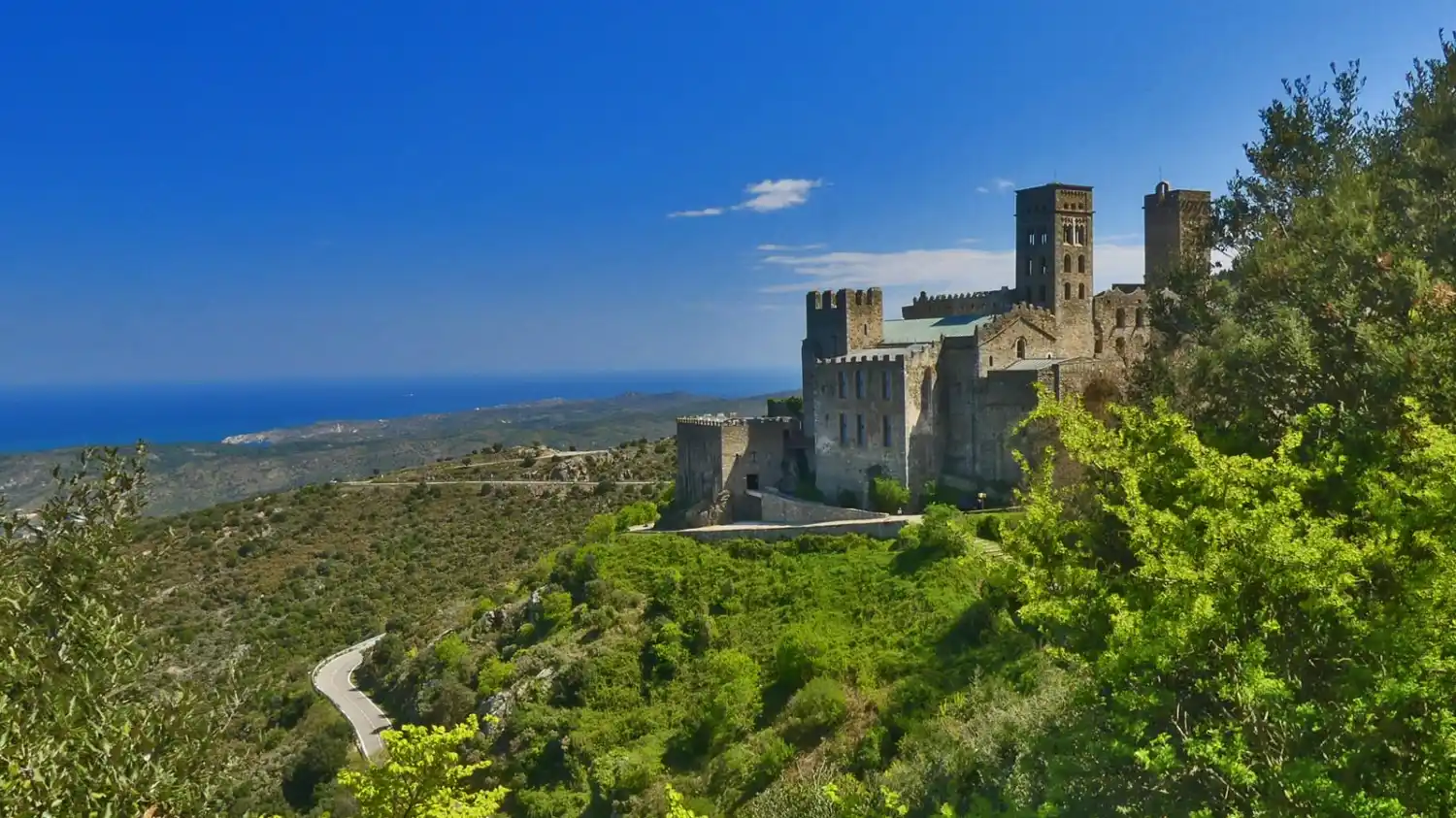
Sant Pere de Rodes is one of the most emblematic monasteries in Catalonia. This Benedictine monastery is a jewel of Catalan Romanesque and one of the most important medieval architectural ensembles in the country. Its privileged location, more than 500 meters above sea level, offers spectacular views of the Port de la Selva bay and the Cap de Creus massif.
The foundation of the monastery dates back to the 9th and 10th centuries, although there are remains and documents that suggest an earlier activity.
The structure of the monastery was developed especially between the 10th and 12th centuries, when Sant Pere de Rodes experienced its period of maximum splendor. The architectural complex is made up of several buildings: the church, the cloister, the bell tower, the monastic dependencies and other auxiliary spaces. The church is a magnificent example of Romanesque.
The cloister, although currently very deteriorated, still preserves part of its structure and allows us to get an idea of the daily life of the monks. The monastery’s outbuildings, such as the refectory, kitchen and cells, reflect the internal organization of the Benedictine community, governed by the Rule of Saint Benedict, based on prayer, work and study.
From the 14th century, the monastery began a slow decline, caused by economic crises, plagues, wars and a progressive decrease in the number of monks. In 1798, it was officially abandoned and fell into ruin.
Visiting Sant Pere de Rodes is like taking a journey back in time: its stones speak of faith, power, art and the history of Catalonia. It is a place where architectural heritage is united with nature and collective memory, turning it into a space for reflection, contemplation and admiration for a past that still beats within its walls.
In short, Sant Pere de Rodes is much more than an ancient monastery: it is a symbol of Catalan heritage, a meeting point between history and nature, and a living example of the cultural wealth of the country.